
INDIA’S DIVERSITY: A MINORITY PERSPECTIVE
Your discomfort in reading this, is expected to be in direct ratio to your privileges. Enjoy!
India is an incredibly diverse country, but it is also one of the most racially intolerant, casteist and Islamophobic. In order to understand this paradox, one must look at the nation through the eyes of its minorities, the people who really make it special, but who are also at the receiving end of things.
(The pictures and the text on this post tell parallel stories of India’s diverse communities.)
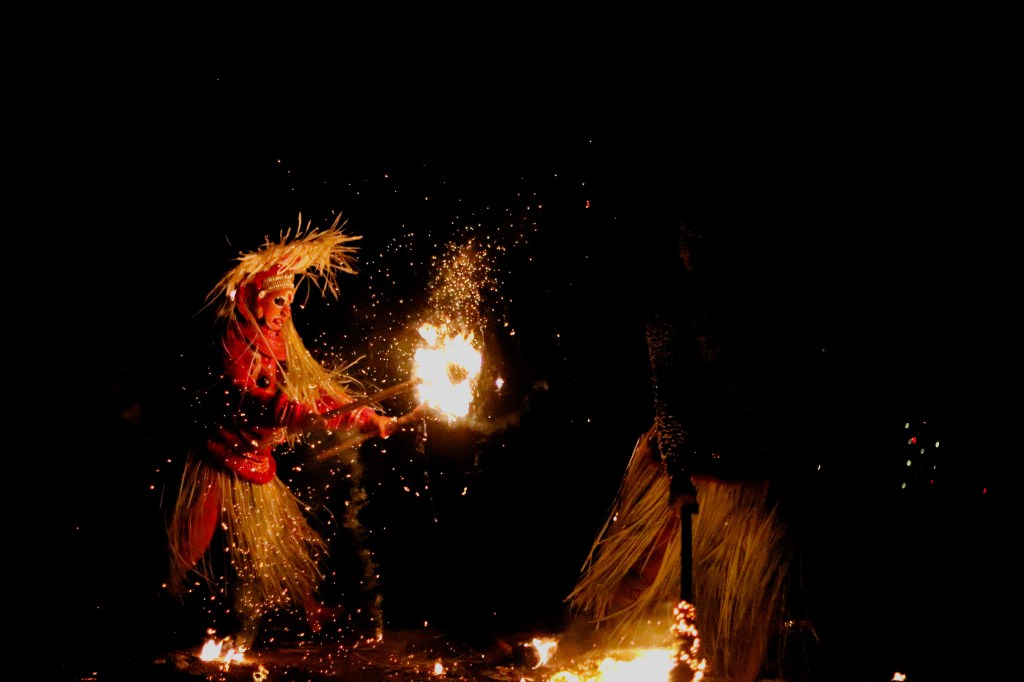

Theyyam, Northern Kerala. An art form of the former untouchables. They attain a divine status as they perform it.
With #BlackLivesMatter movement sending ripples across the world and a pandemic that has brought the world to a standstill, 2020 might be the right time to reassess what our civilizations have become.
While I was impressed by the vehemence of the Americans as they stood by their underprivileged citizens, the manner in which my own country, India, treated its minorities started appalling me.
There is apathy in India, as millions of migrant laborers started walking 1000s of miles to get back to their homes after the unexpected coronavirus lock-down left them helpless. It was an exodus of a bleeding, exhausted and abandoned people.
I am afraid that this crisis was not a simple matter of poor management, it was rather a neglect of human life, a neglect born out of centuries of casteism, racism and Islamophobia that still dominate the Indian psyche.
In fact, India was recently ranked as one of the most racially intolerant nations in the world by a study published by the Washington Post and as an Indian, I will testify for its authenticity.

I was born in the southern Indian state of Kerala. Despite the fact that it is the most literate and educated region in the whole country, the sort of subtle prejudices, biases and discrimination that I have faced, witnessed and observed myself while living there, have always disconcerted me while also making me worry about the larger picture in the country.
But what is really alarming is that all this, is in a nation with a demographic composition of thousands of unique ethnicities, languages, cultures, races and religions.

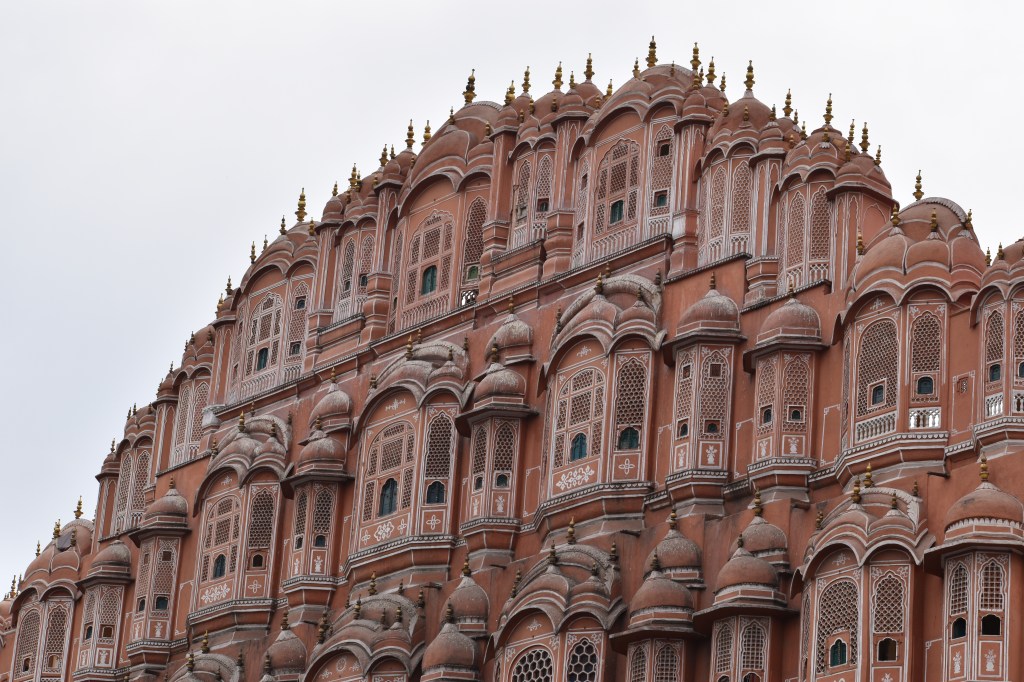
India is truly mindbogglingly diverse. But then, all I had heard of its fascinating ethnic minorities are stories told from the perspective of a tourist or a privileged person who was rich enough to access it. So, it was usually riddled with stereotypes and valued by their photo-worthiness.
It was clear to me that if I were to truly understand the paradox of this nation’s diversity, I need to look at things from the perspective of the minorities, the people from far corners of the country, the people who truly make the nation special.
It was with the hope of being with and getting to know at least some of India’s diverse communities, that I moved to India’s buzzing capital city, Delhi.
THE CHANGES
Delhi is the kind of a place that pops up in one’s head when one thinks of India, with its crowded narrow streets, the heat, the overwhelmingly huge population and the ever congesting living spaces of common people.
India’s capital city is also a good example of how essential Islamic culture is to whatever it is that we call Indian culture today. It has a thriving and vibrant Muslim community whose influence on the city’s lifestyle is remarkable.

Also, the Mughal legacy has left an irresistible incarnadine on the cityscape of Delhi, on its minarets, mausoleums, tombs and uncountable ruins and forts dotted all over it. The Old-World charm of the Jama Masjid, the Chandni Chowk or the thoroughfares of Old Delhi is alluring and its appeal is unmatched by any other part of the city.
But when 3 months ago, a riot targeted at Muslims in north-west Delhi left 54 people dead and 100s scarred, it was a revelation of the nation’s capability for self-destruction.
And to complicate things even more, the nation has a Hindu nationalist government in power, a government of brash braggadocio and rhetorical strongmen, and under them, India is going through an identity crisis, one unlike any it has faced since independence in 1947.

Under this new government, there have been unprecedented changes in the reality of the country in the last few years.
Even in Kerala, the only state where the ruling party could not win even a single seat, organizations aimed at Hindu consolidation have been mushrooming. And suddenly, the middle-class, most of whom, would not have been allowed into temples a few decades ago, started feeling less “Hindu” without the ritualistic appendages and validation of Aryan upper-caste authority.
In Delhi, caste and communal lines are deepening. What had been a vibrant city with influences of cultures from all over the country, it is becoming more of a battleground for a few dominant castes vying for socio-political superiority. Its prestigious educational institutions, some of the finest in the country, have been threatened, its students manhandled by police and tagged anti-national.
I must say that the entire time I stayed in Delhi, I got along only with the minority communities there or with people who, like myself, had come from different parts of the country. And as we became a minority within a minority, we got to witness and experience the communal polarization, the prospect of Aryan domination and also how deeply the society was affected by the universal bane of all societies: racism.
“THE WHITE SUPREMACIST” INDIA
Racism is something that is barely talked about in this country. India as a racist nation is perhaps inconceivable to most of its citizens which could partly be due to its colonial history, when we were at the receiving end of things. But that history is long gone and in the new India, it is high time for us to evaluate whether we have gone from being the victims to the perpetrators of racism.
Today, there is a broad “scale of desirability” when it comes to the races of India. And depending on where you are placed on that scale, you would either condescend to or look up to certain communities. The Aryan races of the North are at the very top of this scale. And in a way, they seem to be practicing a form of Neo-Brahminism on their darker skinned, more indigenous, Southern Indian counterparts who belong to the Dravidian race.
But further down the scale comes the Mongoloid races of the North-Eastern India. They are under-represented, almost always excluded from the national narratives and are constantly discriminated against in the mainland for looking different.
Shaanba Arambam comes from the Manipur state of North-East India. He is an under-graduate student at the prestigious University of Delhi. Living outside his home region, he has had very mixed experiences like rest of the diaspora.

“In order to be called an Indian, we, the people of North-East, should never feel the need to masquerade or give up our cultures and identity.”
Shaanba Arambam, Manipur, India.
“On one hand, it is demeaning that the mainlanders exoticize or indulge us in their sympathies. On the other hand, there have been instances when our people were spat upon, assaulted and belittled with racial slurs. I feel that the same air of superiority is evident in both cases.” He shares.
The racism became particularly pronounced during the pandemic. After the virus arrived in India, it was not long before reports emerged of the North-Easterners being called “Coronavirus”. Similar incidents took place even in the highly ranked colleges in Delhi and elsewhere.
“I cannot deny that we feel alienated from the rest of the country, both physically, due to the mountainous and sequestered nature of the North-Eastern topography, and culturally due to the fact that the mainland Indians assume that they have the final authority on what being an Indian should be like.” Shaanba adds.
“In a country as diverse as India, this ought to never be the case. No one should have the right to question the food habits, the lifestyle and the values of another culture. Instead of trying to culturally emasculate every region that looks and feels different, the rest of India should try to recognize them for the unique contributions they make to the nation’s social wealth.”
However, Shaanba feels that the worst is over. The North-East is no longer overwhelmed by military conflicts and separatist movements that used to be the norm once. But the region has a long way to go before they gain an equal footing with the rest of the country.
But in the land of Untouchability, with its residues still ingrained in people’s minds, equality could be a privilege of the few. The racism that Indians refuse to acknowledge is compounded and complimented by the Casteism that most Indians privately celebrate.
It would be no exaggeration if I were to say that as an Indian, everything from your social status and values, to your aspirations, to your occupation and even your sexuality could be dictated by the almighty social force of caste and by extension, your race.
Even today, the servants at your home or the people who do the menial or hard physical labor would mostly, if not always, belong to a darker skinned lower-caste community. Those people are still forced to take up their traditionally assigned roles that their ancestors undertook.
Moreover, the nation’s caste based endogamy effectively makes sure that these divisions would remain alive for centuries to come.

By the virtue of its social structures, India might have become an exploitative Capitalist machine and the addition of the caste system to its foundations, constructively ensures that the perpetually oppressed will remain oppressed forever. As the nation moves on in its break-neck speed of development, the socioeconomic inequality makes sure that the lower-castes would have to remain to clean up after everyone else.
I believe that in order to properly address the question of castes, one must first acknowledge the politics in the larger racial composition of India.
There is an overarching racial divide between the Indo-Aryan races of the North and the Dravidian races of Southern India even today. The former is considered to be the more desirable one and assumes an air of superiority over the latter, by the virtue of the whiter tone of their skin, which is after all, the universal indicator of racial worth.
There is something supremely ironic about the fact that an entire sub-continent of colored people discriminate against each other on the basis of their perceived shades of “fairness”. It is even comical in a certain way. But the manner in which it affects the lives of its inhabitants is no laughing matter.
Everything from a person’s physical desirability to their social stature could be measured and judged by the color of their skin. In Bollywood or any other Indian film industry today, there is an almost complete absence of dark-skinned actors except for playing nefarious roles. In fact, Indian film industries have a culture of bringing in African actors to play particularly fiendish characters who would be ultimately defeated by a fairer skinned hero.
Moreover, the people belonging to the lower-caste communities are much more likelier to have a darker complexion than their higher-caste counterparts, which gives the society the opportunity to socially stratify someone the moment they see them.

The racism in the North-South divide later conflates with the caste system and their delicate blend cascades down into the society. The perfect example of this cascading effect could be observed in the treatment of Africans in India.
The small African community in India, along with the international students from the African continent, face some of the nastiest forms of discrimination anywhere in the world.
In Delhi, there have been instances when they were assaulted and even murdered in and around Noida and the National Capital Region, they are viewed as drug-dealers and debauchees, African women are subject to daily instances of lewd and salacious behavior from strange men and there are chances you would not even make a friend in the country during your time here.
Meanwhile, there is almost no meaningful discourse on racism in the country. When asked about it during a discussion in Aljazeera news channel, Tarun Vijay, a former member of the parliament, denied racism exists in India by saying: “If we were racist, why would the entire South — you know the Tamils, you know Kerala, Karnataka and Andhra — why do we live with them? We have blacks, black people around us…”
His statement reveals how potent the racial biases that separate the nation’s two regions really are. If that came from a parliamentarian, how could anything different be expected from the larger populace? It also tells us how the standards of “Indianness” are always determined by the North-Indians. They tend to assume the power to dictate what makes someone Indian and what does not.
Moreover, they retain a deliberate ignorance or a complete disregard for anything related to South India. For them, the entire South is simply Madras and all south Indians “Madrassis”, which is ironically the very names the British used to call South India and its people during the colonial rule.
This lop-sided power structure became more problematic when the Aryans started questioning the food habits, sartorial choices and lifestyles of other communities across India. It became dangerous, when religion was brought into the mix. Today, as the ruling party endeavors to create a unified Hindu identity through legislations like the beef ban and a culture of upper-caste emulation, India is witnessing the promotion of Aryan culture as the standard of not just the national identity, but the identity of Hindu religion itself, in order to consolidate most Hindus under a common Aryan-Hindu identification, with very little appreciation for the nuances between various ethnicities.
AN ANTI-MUSLIM INDIA
However, I strongly believe that it is impossible for India to ever truly become a “Hindu nation” as the ruling party envisions. The differences between the component castes and ethnicities of the Hindu religion are too vast and the community itself is too divided for this to be possible.
But what the party can do, is to create an Anti-Muslim India, because unfortunately, an inherited skepticism of the Islamic religion is something that most non-Muslim Indians share. I suppose, it has always been there, and is now being harnessed and exacerbated by the ruling party for creating their version of India and they expect all Hindus to either accept or watch in silence, as they culturally, socially and politically debilitate the nation’s Muslims.
I am hopeful that this wont be the future of the country, but one can never rule out its possibility. During the time I have lived in India, I have personally known people whose mindset towards Muslims ranges from baseless suspicion (“why should they have too much religious education? what are they being taught there in Madrassas?”) to outright hatred (“Uncontrollably rising Muslim population is the Judgemental Flood that Hindu and Christian mythologies are predicting.”).
While the latter is a minority, the former thoughts are shared and perpetrated by an alarmingly large and increasing chunk of population, irrespective of their education levels or age. This is despite the fact that every non-Muslim Indian would be personally in good terms with individual Muslims.
I shall say no more about the Muslim experience in India except for giving you the testimonial of Asma Khanam who hails from Old Delhi:
“Modern India, with its new government now in 2020, is becoming a toxic place for Indian Muslims. People of our community get mob lynched almost daily and it is becoming the normal. The discrimination seems to be increasing everyday, the situation getting worse every second. Given that the majority of the Muslims in India are illiterate, poor, underprivileged and persecuted second class citizens, there is no way out, it is all a shout in the void.
Having a father who is an epitome of how they identify a Muslim, knowing he is gonna go for work and worrying if he is going to come back or if he is getting discriminated against is heart-wrenching.
I love my country, its diversity, the cultures and traditions it breeds, the places, the climate and the people around me who make me feel like an unapologetic Indian Muslim. But when it comes to the living situation, things change; it is becoming difficult to understand that even a small number of people hate me for the sole reason that my beliefs are different from theirs.
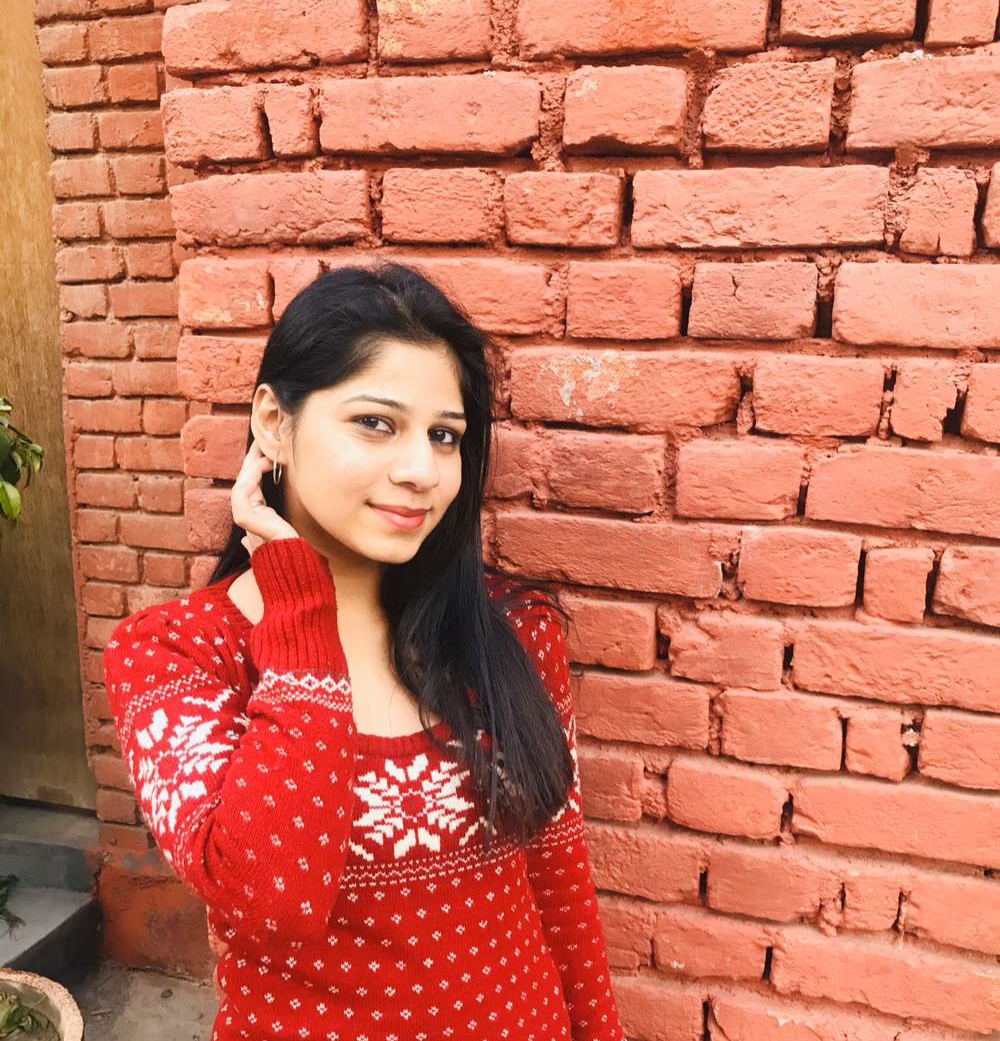
“I feel like I grew up in a different India, but am living in a different one.”
Asma Khanam, Old Delhi, India.
Living in a country like India, people always have something to learn from you, and you have so much to explore out of even your own culture. People are most of the time, curious about your traditions, particularly during the festive seasons, because, being a minority, you are usually one of a kind in your social group.
Muslim cuisine in Delhi, usually called the Mughlai food, is a delicacy which people from different communities enjoy. An extended timeline of Muslim emperors, have built many mosques, shrines, and tombs all over India, like the Jama Masjid, Fatehpur Sikri, and the UNESCO World Heritage Site, Humayun’s Tomb, which have all contributed a unique flavor to the larger heritage of the country.
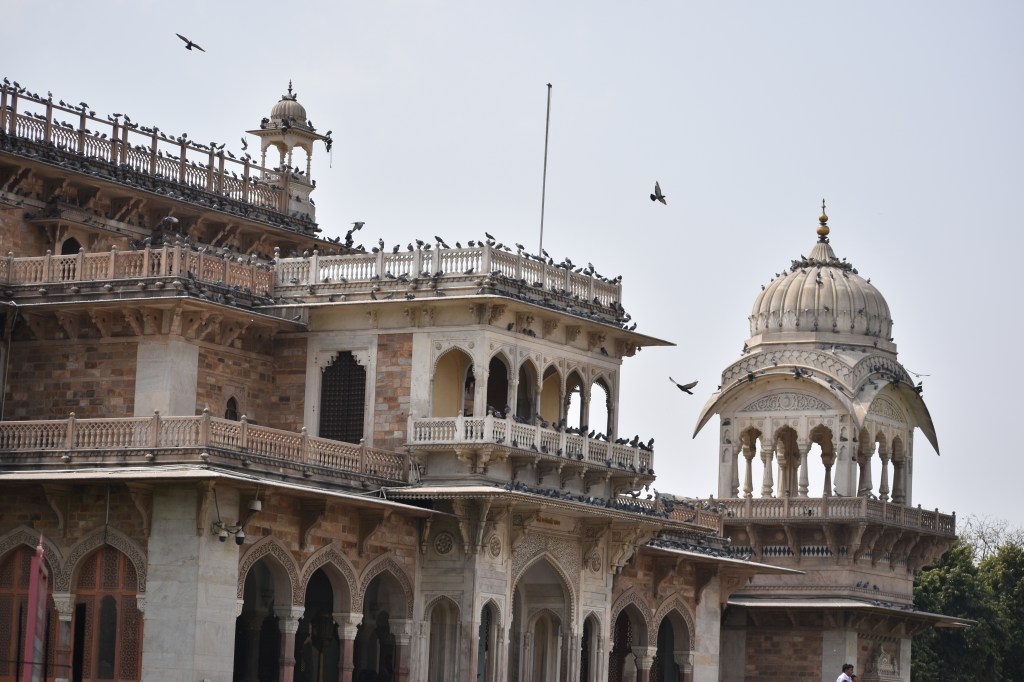
However, the people who actually encourage, appreciate and benefit from this diversity and have intercultural exchanges are only a minuscule part of the population.
Urdu is the mother tongue of most Muslims in India, but the language is dying. Many Urdu professors and enthusiasts believe that the teaching and learning of the language is getting difficult in India with time, due to dwindling resources. It is a beautiful language that has to be protected at all costs.
But, with the rising culture of intolerance and intensifying hatred, openly professing our identity has become a crime. My father is an Indian businessman and in his entire experience, the business has never gotten this bad. Now, the discriminatory behavior is obvious and showcased openly.
Being targeted by the mainstream media, the government, the fascists and everything else that comes with them, losing friends over politics or discovering the hatred buried in them, the way history that has nothing to do with you is dug up and blaming you for it are all torturously depressing.”
India is a nation with an immense potential, but without scope for meaningful inter-cultural exchanges or if underlying social biases are not acknowledged and resolved, what could be its greatest asset could also turn into a self-destructive force.
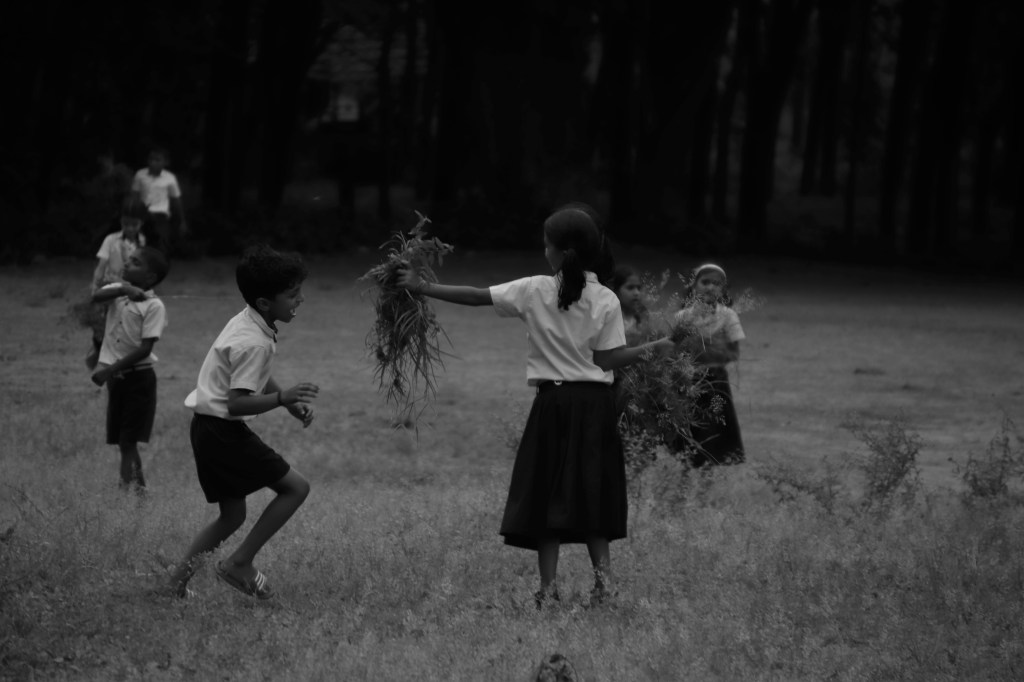
India’s diversity has to cease being something that only a privileged few can access and experience. Otherwise, its various communities would have to face discrimination for being different and be exoticized as something foreign or, given the Indian obsession for hierarchizing oneself, even become persecuted entities who would forever be looked down upon by more privileged sections of the society, in order to feel better about themselves.
It is time for Indians to demystify the very idea of India and see the nation for what it has truly become. But instead, if the nation retains its complacency and neutrality to the plight of its minorities, the ideals of “unity in diversity” that were preached to us since we were young, might turn into the ghost of what the nation could have become.
Also Read:
“The Brahmin Burden”
It is a sad truth that most revolutions and independence movements subside but simply by replacing one form of oppression by another. The pomp, songs, flags and vigor will all be soon appropriated by a new ruling class and symbols of liberation will later be held in sway over the proletariat as if they were imperial scepters….


 Escaping Samsara
Leave a reply to Riddhi Cancel reply